

Overview
Over the last few years Project Baseline UK divers have been supporting the Ocean Conservation Trust (OCT) with seagrass restoration efforts on the south coast of the UK. Divers have carried out site surveys and seagrass seed collection dives. This year we returned to help plant seeds cultivated in the OCT laboratory. Over the course of the 2 day project, divers completed 14 separate dives and used prototype manual seeding devices to distribute over 50,000 seagrass seeds in a specially selected area of Plymouth Sound.
The Ocean Conservation Trust
The OCT is a Plymouth based UK charity that connects people to the ocean in order to inspire positive action in support of marine conservation. The charity has a specific focus on engaging with local communities and exists to restore and protect the ocean, focussing on pro-ocean behaviour and habitat recovery.
Why seagrass
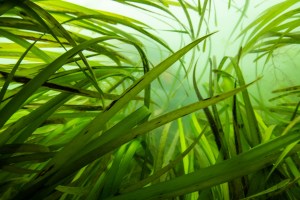
Seagrasses are a unique group of flowering plants. There are 4 families of seagrass and 72 species worldwide. The plants play a key role in habitat creation by slowing water flow and trapping particles between their leaves. Other marine species are attracted to the seagrass as a source of food and protection from predators. This means they support fisheries and are a great nursery for juvenile fish. Seagrass also provides coastal protection and acts as a carbon sink, helping to counter global warming. However, seagrasses are sensitive to change. In the UK it is adversely affected by fishing techniques and recreational activities, such as anchors from pleasure craft. Through its seagrass restoration programme, and through the education of coastal communities, the OCT hopes to reverse the decline of seagrass on the south coast of the UK. [Ref: The planetary role of seagrass conservation, Unsworth et al.]
Previous Efforts
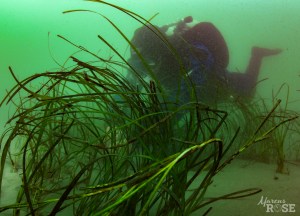
In previous years PBUK divers worked with the OCT to survey existing seagrass meadows, to assess their suitability for future seed collection. The surveys were conducted in 2 stages. Firstly, wide area surveys were conducted to assess the general extent and health of the seagrass. These surveys were conducted in Plymouth Sound, the Solent near Portsmouth, and off the coast of Cornwall. Once healthy meadows had been identified divers ran 20m transect lines to count the number of seagrass leaves containing seeds. This was done by looking for small white dots on the leaves, a sign of the the reproductive leaves.
Once the meadows with the highest density of seeds had been identified the teams waited for them to reach maturity before returning to harvest them by hand. The harvesting process involved drifting with the current and picking the seagrass leaves containing seeds. The seeds were taken to the OCT laboratory in Plymouth to be extracted from the seagrass and cultivated. They were then stored at the laboratory to await planting at the right time of year.
2025 Seagrass Planting
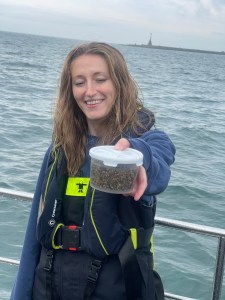
During the June 2025 project a site was identified in Plymouth Sound for seed planting. It was specifically chosen for its high tidal flow, shallow waters, and sandy seabed.
On dive 1 PBUK divers completed a site survey using GoPro cameras and surface markers buoys fitted with GPS, to allow the OCT scientists to check the suitability for seagrass. Once it was confirmed as suitable a shot line was installed and the divers marked out a square using cave line and diving weights. By noting the GPS position of the shot line, and the bearings of the 4 edges of the square, the scientists will be able to to return to the site as needed to monitor progress.
With the area prepared for seeding it was time to test out the mechanical seeding devices developed by the OCT team. Previous restoration efforts deployed the seeds using hessian bags, but these broke down too quickly or were displaced by adverse weather conditions. The prototype mechanical devices were developed to try and deploy the seeds deeper into the substrate, approximately 40mm below the surface, to keep them in place and to give them a chance to germinate.
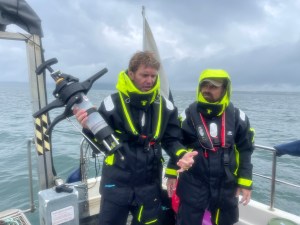
The seeds were mixed with an algae based media to hold them in suspension prior to deployment so that they were evenly distributed in the seeder. However, on the first couple of attempts the suspension was too thick, which meant it took over 40 minutes to deploy 1 seeder worth of media. Subsequent efforts used a less viscous media, reducing the deployment time down to about 10 – 15 minutes.
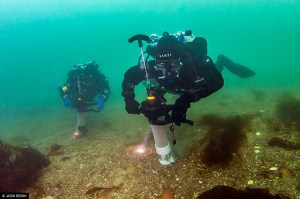
With the area set and the seeders working well the team used the remaining dives to deploy as much seed as possible into the test site. In total over 50,000 seeds are thought to have been deployed. The divers and scientists now wait with baited breath to see what happens. It will likely be August / September 2025 before we know whether the seeds have taken and produced seagrass.
The Team
The project was delivered by scientists from the OCT, divers from PBUK, and using the fantastic logistics of Discovery Divers. It was a great example of how scientists and recreational divers can work together to deliver scientific goals. The diving was not easy, but was well within the capacity of PBUK divers, who were able to help advise on the execution of the dive plan.
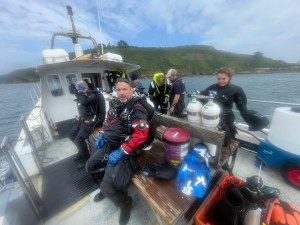
There were 3 OCT scientists onboard during the 2 days. Each day the team brought the seeding devices, the seagrass seed media, and directed the wider teams efforts. 5 divers from PBUK supported both days, 3 of which have previous experience of working on seagrass habitat restoration. It was great to introduce 2 new team members to this worthwhile cause and their training with Global Underwater Explorers meant they had ample capacity to deliver the aims of the project.
Over the 2 days each dive team completed 7 dives and deployed 12 seeder devices worth of seagrass seeds. This amounts to over 50,000 seeds!

Photos by Jason Brown and Marcus Rose.
 Project Baseline UK